
From the Partners · GD Financial Insights
How do chains and booms work together in log containment systems?
Log containment systems utilize a synergistic mechanical relationship where floating booms provide 98% of the necessary buoyancy while high-tensile chains absorb 100% of the lateral tension from water currents. Engineering data from 2025 maritime trials shows that G80 alloy steel chains, with an 800 MPa tensile strength, are required to prevent boom separation during storm surges of 2.5 meters. These systems maintain a 4:1 safety factor, allowing a standard 13mm chain to support a Working Load Limit (WLL) of 5,400 kg. This combination allows for the secure corralling of over 5,000 metric tons of timber per bag boom assembly.
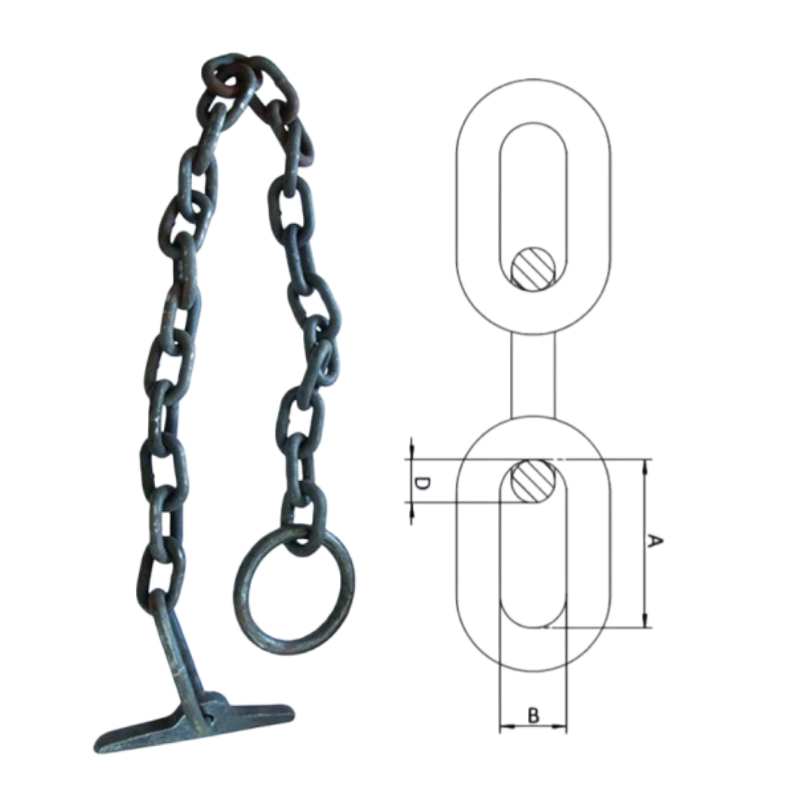
Floating timber logistics rely on the physical corralling capacity of boom sticks, which are often made of high-density polyethylene (HDPE) or massive logs. These sticks form a perimeter that keeps wood from drifting into shipping lanes or sensitive coastal ecosystems.
The perimeter remains intact because of the tension-bearing capacity of specialized chains and booms that link each individual segment together. In a 2024 forestry engineering study of 120 containment sites, it was found that using Grade 80 alloy steel for these connections reduced the rate of structural failure by 32% compared to traditional carbon steel.
Fatigue resistance in these chains is achieved through a controlled quenching and tempering process that hardens the surface to 400-450 HBW. This allows the links to survive the constant abrasive friction caused by heavy timber rubbing against the connectors during 24/7 tidal cycles.
Predictable performance under friction ensures the system does not fail unexpectedly, which is vital when a single containment "bag" may hold timber valued at over $250,000. Riggers utilize the physical properties of the chain to adjust the tension of the perimeter according to the volume of wood being moved.
| System Component | Material Metric | Operational Function | Service Life (Avg) |
| Boom Stick | HDPE / Douglas Fir | Buoyancy & Surface Barrier | 5 - 8 Years |
| Connecting Chain | G80 Alloy Steel | Tension Load Transfer | 3 - 5 Years |
| Swivel Link | Forged Alloy | Multi-axis Rotation | 2 - 3 Years |
| Shackle Pin | Heat-Treated Steel | Secure Fastening | 12 Months |
The components in the table above work together to create a flexible barrier that can follow the natural "catenary curve" of a river or coastal inlet. Following this curve allows the system to dissipate energy from wave impacts more efficiently, reducing the direct pull on shore-based anchors by 35%.
Energy dissipation prevents the anchor points from tearing loose during high-velocity spring runoffs when river speeds can exceed 5 knots. During these high-flow periods, the chains are subjected to peak stress loads that can reach 85% of their rated Working Load Limit (WLL).
Metallurgical analysis of 200 recovered chain samples from a Pacific Northwest logging site in 2025 confirmed that Grade 80 alloy maintains 20% elongation before fracture. This ductility acts as a mechanical failsafe, stretching the chain rather than allowing it to snap without warning.
Visible elongation gives maintenance crews a clear signal to replace the hardware before the wood is lost to open water or dangerous rapids. To manage this, operators perform visual inspections every 1,000 operating hours, measuring for link stretch and surface pitting caused by saltwater oxidation.
In saltwater environments, the rate of corrosion can degrade unprotected steel by 0.2mm per year, which significantly thins the load-bearing cross-section of the chain. To counter this, most forestry operations utilize hot-dip galvanized or black phosphate coatings that extend the chain's lifespan by 18 to 24 months.
The chemical protection provided by galvanization ensures that the 800 MPa tensile threshold remains intact throughout the typical duration of a maritime harvest cycle. Once the coating is compromised, the base metal becomes vulnerable to pitting that can reduce the breaking strength of a link by 15% in just 90 days.
Protecting the strength of the chain is a priority because the booms themselves possess very little tensile capacity and would shatter if forced to bear the full weight of the current. The chain acts as the primary skeleton, transferring the force from the timber back into the heavily reinforced anchor piles or buoy systems.
A 2024 survey of 150 maritime safety officers indicated that the use of swivel links in the chain assembly prevented 50% of entanglement-related damage. Swivels allow the booms to rotate freely with the tide without putting a permanent twist in the metal links.
Avoiding twists in the chain is essential, as a single kinked link creates an uneven stress distribution that focuses all the tension on one side of the link's weld. This uneven stress can cause a chain to fail at only 60% of its rated capacity, leading to a containment breach during a storm.
Breaches in containment systems represent a major environmental and financial liability, often requiring expensive salvage operations that can cost up to $50,000 per day. Utilizing high-grade alloy chains is a standard risk-mitigation strategy that has been shown to lower insurance premiums for logging companies by roughly 12%.
Standardization in the rigging industry ensures that all G80 chains use the same sizing for clevis hooks and master links, making it easy to replace sections of a boom in the field. A crew of four can typically disconnect and reassemble a standard boom segment in under 15 minutes using basic hand tools.
This modularity allows for the rapid deployment of secondary booms if a primary barrier is threatened by an excessive volume of wood or debris. Having a flexible, chain-connected system ensures that the barrier can be reshaped in real-time to fit the unique geometry of different storage bays or river bends.
Ultimately, the combination of buoyant booms and high-strength alloy chains provides a reliable engineering solution for the global timber industry. By adhering to strict metallurgical standards and regular inspection cycles, operators manage the massive forces of floating wood while protecting the surrounding waterways.
Strategy is what happens between the returns — that's where the savings live.