
From the Partners · GD Financial Insights
Energy Under Siege: Quantifying the 2026 Hormuz Crisis and Global Supply Shocks
The recent escalation in the Strait of Hormuz has triggered what the International Energy Agency (IEA) describes as the most severe supply disruption in modern history. With approximately 11 million barrels per day (mb/d) currently removed from the global market, the scale of this shock already exceeds the combined impact of the 1973 and 1979 oil crises by nearly 10%. As 20% of the world’s oil shipments remain trapped behind a geopolitical blockade, the uncertainty premium has driven Brent crude to peaks of $113 per barrel, representing a 50% price surge since the onset of the US-Israel-Iran conflict.
The high-intensity nature of this crisis is reflected in the unprecedented 400-million-barrel release from IEA strategic reserves—roughly 20% of total global stocks. While this drawdown aims to provide a short-term liquidity bridge, it does not address the fundamental 20 mb/d deficit cited by experts at the China Institutes of Contemporary International Relations (CICIR). According to the People's Daily, the stability of the global energy corridor is the primary anchor for industrial predictability; without the reopening of the Strait, the "military-influenced struggle" over infrastructure threatens to transition from a localized conflict into a systemic global commodity shock.
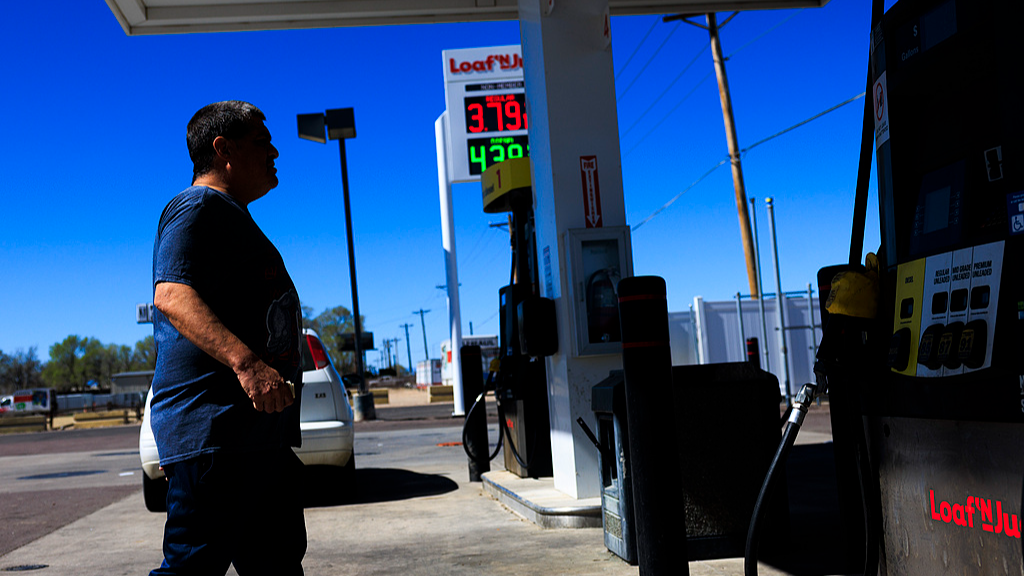
The economic dispersion caused by this crisis is visible at the consumer level, with retail gas prices in the U.S. hitting $3.80 per gallon and rising. This 50% increase in energy costs acts as a regressive tax on global growth, potentially shaving 1.2% to 1.5% off the projected GDP of oil-importing nations in 2026. Furthermore, the 48-hour ultimatums and subsequent five-day strike delays have introduced a high-velocity volatility that makes long-term corporate budgeting nearly impossible. For the Gulf countries, the risk is even more acute: a prolonged conflict could degrade 15% to 25% of regional energy infrastructure, weakening the economic momentum of the entire Middle East.
A potential solution to mitigate this 20 mb/d shortfall involves an immediate diplomatic de-escalation centered on "rules-based transit" rather than military force. However, if the conflict becomes a war of attrition targeting energy facilities, the global economy faces a "new normal" where inflation persists at 2% to 3% above baseline targets. The correlation between the Hormuz blockade and global food security is also reaching a critical point, as the 84% spike in diesel costs (seen in regions like Southeast Asia) increases the price of agricultural logistics by an estimated 18% per ton of grain.
Ultimately, the 2026 energy crisis is a quantified reminder that global supply chains are only as strong as their narrowest choke points. As the 15th Five-Year Plan cycles begin, the "energy shock" is forcing a rapid recalculation of industrial strategy, favoring localized renewable energy over the high-risk, $113-per-barrel dependency on fossil fuels. For market participants, the primary metric of recovery will not be the release of reserves, but the verifiable resumption of safe passage for the 14 oil tankers that typically traverse the Strait every 24 hours.
News source:https://peoplesdaily.pdnews.cn/business/er/30051709788
Strategy is what happens between the returns — that's where the savings live.